Takuma Sato Updates on Broken Ribs and IMS Test Results for 2026 Indy 500 Return With Rahal Letterman Lanigan Racing
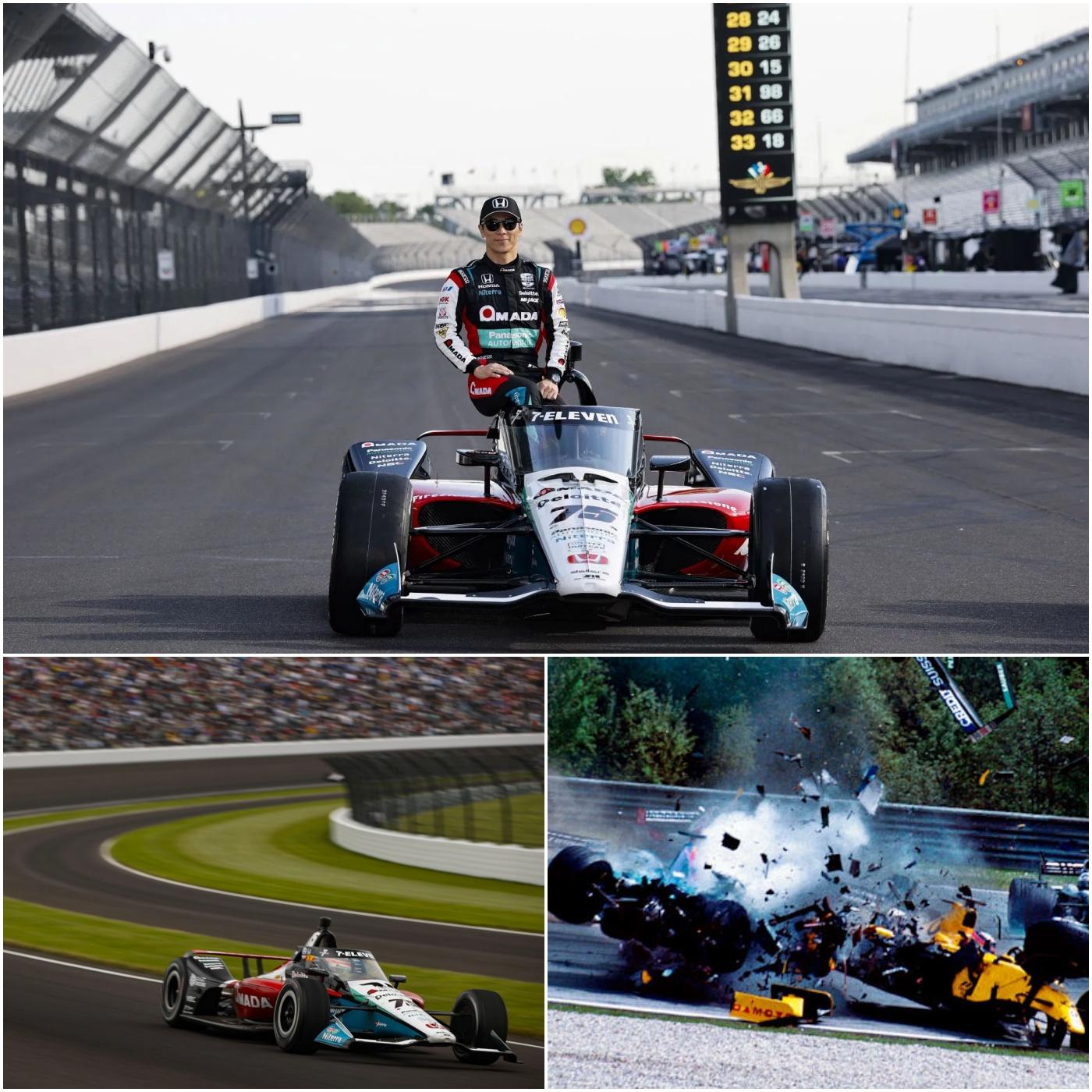
Indianapolis, IN – Two-time Indianapolis 500 champion Takuma Sato emerged from a pivotal test session at the Indianapolis Motor Speedway this week with renewed optimism about his racing future. The 48-year-old Japanese veteran, known for his fearless overtaking maneuvers and indomitable spirit, provided a candid update on his recovery from a fractured rib sustained earlier this year, while sharing positive feedback on the performance of Rahal Letterman Lanigan Racing’s (RLL) No. 75 Honda during the two-day evaluation. As the off-season buzz builds toward the 110th running of the Greatest Spectacle in Racing in 2026, Sato’s words hint at a potential return to the Brickyard, where he has already etched his name in history with victories in 2017 and 2020.
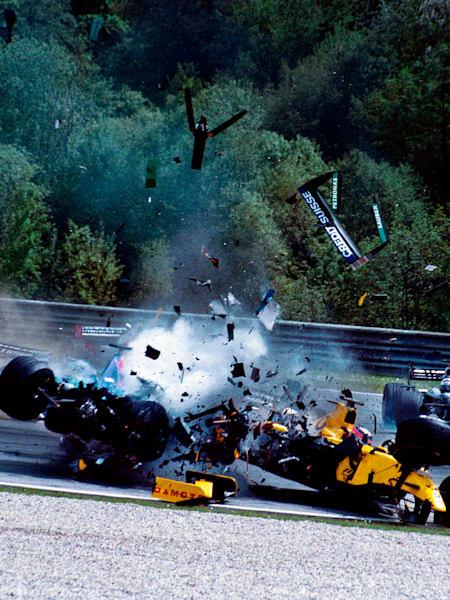
The path to this moment hasn’t been without its bumps—literally. Sato’s 2025 campaign began on a high note when RLL announced his return as a one-off Indy 500 entrant in February, marking his ninth consecutive appearance in the event. Sponsored by AMADA, the precision machinery company that has deepened its partnership with the team, Sato arrived at the IMS with the weight of expectations. But Day 2 of the Indy 500 Open Test in late April turned disastrous. Just minutes after NASCAR star Kyle Larson’s own wall contact, Sato’s car snapped sideways entering Turn 1, slamming into the concrete barrier with a bone-jarring 94G impact. The wreckage was extensive: the rear end shattered, the seat fractured, and Sato himself walked away with a broken rib that would shadow his preparations for months.

“I lost the car completely,” Sato recounted at the time, speaking from the infield care center after being cleared with only minor bruises beyond the rib injury. “There was a little indication something was off on the backstretch, but by Turn 1, it was too late. The safety advancements in IndyCar saved me that day—no doubt about it.” The crash, captured in stark on-track footage, showed Sato’s No. 75 erupting in a plume of debris, a stark reminder of the oval’s unforgiving nature. RLL’s mechanics faced a Herculean task, rebuilding a brand-new car from the ground up in under three weeks for the May 25 race. Yet, true to his reputation as “The Warrior,” Sato refused to yield.
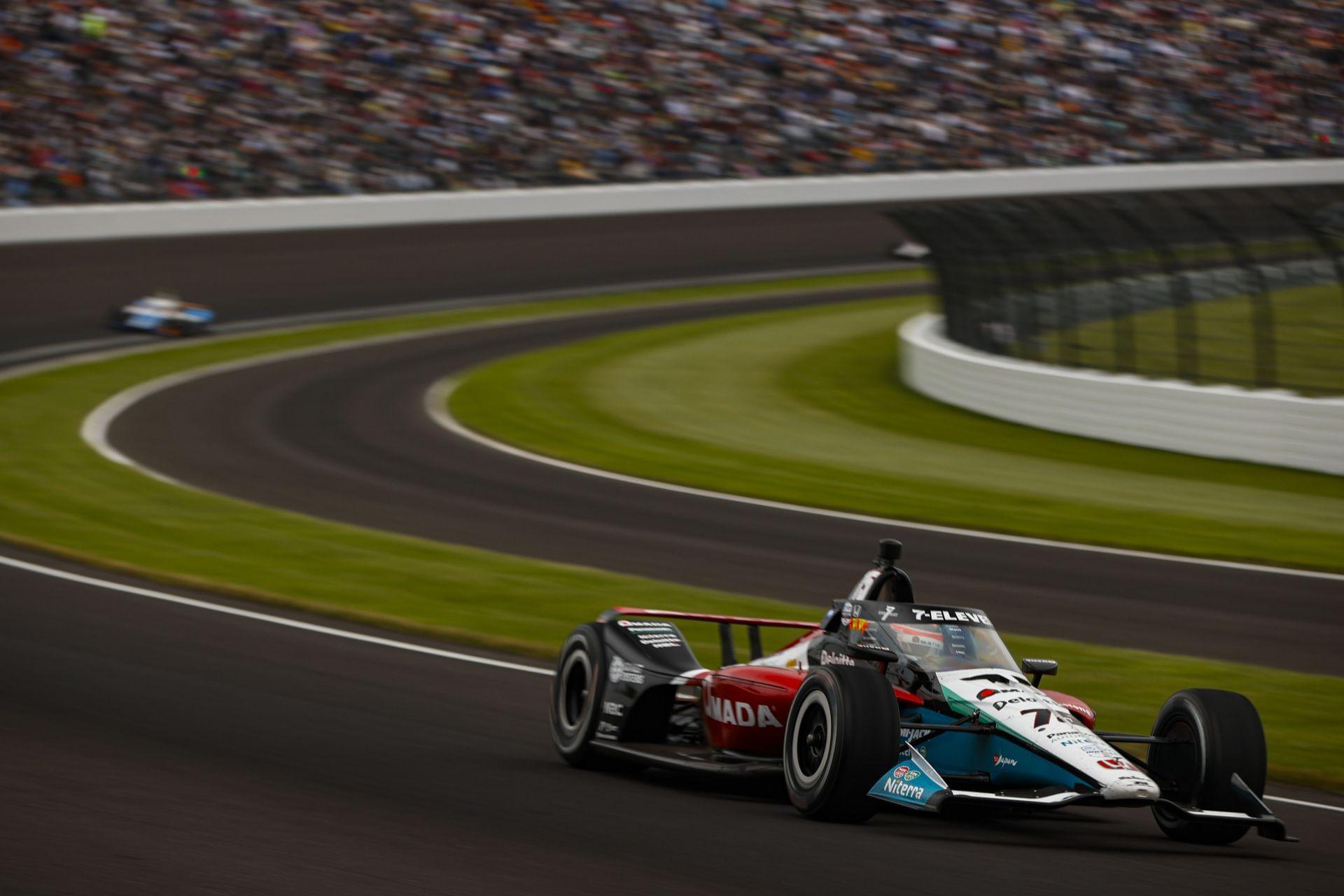
Against medical advice and with pain-mitigating injections, Sato strapped in for the 109th Indy 500. Qualifying proved his resilience: he stormed to second on the grid with a blistering four-lap average of 232.478 mph, nipping at the heels of surprise pole-sitter Robert Shwartzman. “Racing with the injury wasn’t ideal, but the adrenaline takes over,” he said days before the green flag. The race itself was a chaotic affair, marred by multiple cautions and strategic gambles, but Sato navigated it to a hard-fought ninth-place finish—RLL’s best result of the day. Teammates like Graham Rahal and Louis Foster lagged further back, underscoring Sato’s value to the squad. Post-race, the rib fracture lingered, sidelining him from further IndyCar action as he focused on rehabilitation.
Fast-forward to October 21-22, and Sato’s return to IMS for a multi-team test session marked a turning point. Invited due to RLL’s Indy pedigree and local ties, the team joined Chip Ganassi Racing, Arrow McLaren, and Ed Carpenter Racing to evaluate upgrades for the 2026 season. Priorities included Firestone’s new Firehawk racing tires, a repaved section at the exit of Turn 2 on the 2.5-mile oval, and experimental brake and damper components aimed at enhancing stability and reducing wear. Sato, paired with 2016 winner Alexander Rossi for the chassis tech trials, logged dozens of laps in the No. 75, providing invaluable data on the tweaks’ real-world efficacy.
“Everything’s healed,” Sato said with a characteristic chuckle after Day 1, easing concerns about his rib. “It wasn’t comfortable climbing back in after six months away, but after 10 laps, I was up to speed. The team gave me a lot of confidence—no hesitation, no pain. We’re talking about components that could make a big difference next year, especially on restarts and in traffic.” His feedback was glowing: the dampers smoothed out mid-corner bumps on the freshly paved Turn 2, while the brakes offered sharper modulation without the fade issues that plagued some 2025 runs. Lap times weren’t publicly disclosed—true to IndyCar’s secretive test protocols—but sources close to RLL described the session as “smooth sailing,” with Sato’s inputs helping refine setups for the entire field. Rossi echoed the sentiment, noting the collaborative atmosphere fostered quicker iterations.
For RLL, a team that has grappled with inconsistent speed at Indy in recent years, Sato’s involvement is more than technical. Co-owner Bobby Rahal, who has shepherded Sato through two full-time stints (2012 and 2018-2021) and multiple 500 cameos, views him as a linchpin. “Takuma’s experience is priceless,” Rahal said. “His two wins here aren’t luck—they’re from that attention to detail and sheer will. We’re building around what worked in 2020.” Sato’s 2025 qualifying prowess alone guaranteed “bumping” drama in the 33-car field, a rarity that injected fresh excitement into May. Now, with the test in the rearview, whispers of a full 2026 commitment grow louder.
Sato remains coy but optimistic. “I’d like to say more, but we’re piecing it together,” he teased post-session, alluding to sponsorship alignments and schedule logistics. At 48, he’s among IndyCar’s elder statesmen, yet his passion burns bright. “The Indy 500 isn’t just a race—it’s a dream. Chasing a third win? That’s the fire that keeps me going.” Only 10 drivers have achieved the trifecta, a club that includes legends like A.J. Foyt and Rick Mears. Sato’s journey—from Formula 1 journeyman with Jordan and BAR to IndyCar trailblazer as the first Japanese winner—makes him a compelling contender.
As winter approaches, the motorsports world watches RLL’s garage in Zionsville, Indiana, where engineers pore over test data. Sato’s rib may be mended, but his drive is unbreakable. Whether it’s the subtle hum of damper tweaks or the roar of 2.2-liter twin-turbo V6s, one thing is clear: Takuma Sato is far from done at the Brickyard. For fans dreaming of another Milk Life celebration in 2026, these updates are music to the ears—a warrior reloaded, ready to charge once more.